




Rotten Window Repair in Greenwich, CT & Westchester
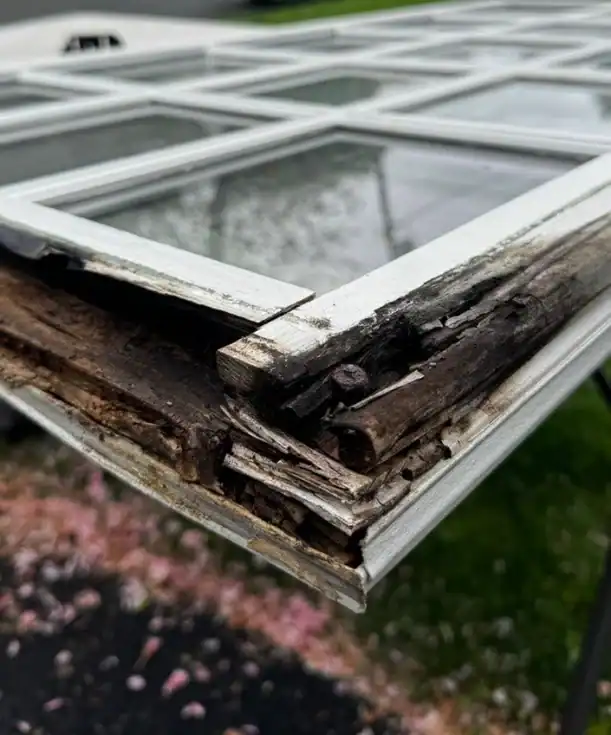
Wood rot in window and door frames does not announce itself. The first visible sign is a soft spot on the sill, discolored paint at a corner joint, a door frame that feels spongy when pressed, and is almost never the beginning of the problem. By the time any of those signals appear, moisture has typically been working into the end grain for one or two seasons already. The deterioration visible from the outside represents the surface of a failure that extends inward, and in some cases downward into the rough framing beneath the sill.
Prestige Window and Door Repair has been based in Greenwich, CT since 2014, serving Fairfield County and Westchester County for rotten window and door frame repair across more than a decade. The pattern we see across every community in the service area is consistent: rot that started small, was deferred, and reached a state that looks like a replacement job but almost always is not. We assess every section of the frame before quoting a scope, and we do not recommend replacement when targeted repair is the correct answer.
Here're spots where window and door rot is most common.
Prestige Window and Door Repair has been based in Greenwich, CT since 2014, serving Fairfield County and Westchester County for rotten window and door frame repair across more than a decade. The pattern we see across every community in the service area is consistent: rot that started small, was deferred, and reached a state that looks like a replacement job but almost always is not. We assess every section of the frame before quoting a scope, and we do not recommend replacement when targeted repair is the correct answer.
Here're spots where window and door rot is most common.
Window Sills and Bottom Rails
The horizontal sill face is the first place to fail in any wood window, it bears the full load of water running off the glass, sits exposed to UV on its upper surface, and collects debris in the joint where it meets the side jamb. In Greenwich and the Long Island Sound corridor, where the prevailing southwest wind carries elevated moisture from the water, south and west-facing sills on unshaded elevations deteriorate faster than their north-facing counterparts on the same house. The same failure pattern appears in double-hung windows and casement windows alike — the sill is always the first point of entry for moisture.
Corner Joints and Frame Junctions
Corner joints fail where two pieces of wood meet at a mitered or butt joint, the point where the paint film is thinnest, the end grain is exposed on both members, and water can sit in the junction rather than running off. Once moisture enters a corner joint, rot progresses rapidly because the enclosed geometry traps humidity against the wood rather than allowing it to dry between rain events. In Westchester County properties with mature canopy cover, shaded north and east-facing windows can remain damp for 24 to 48 hours after rain, compressing the dry cycles that would otherwise slow rot progression significantly.
Rotted Door Frames and Threshold Areas
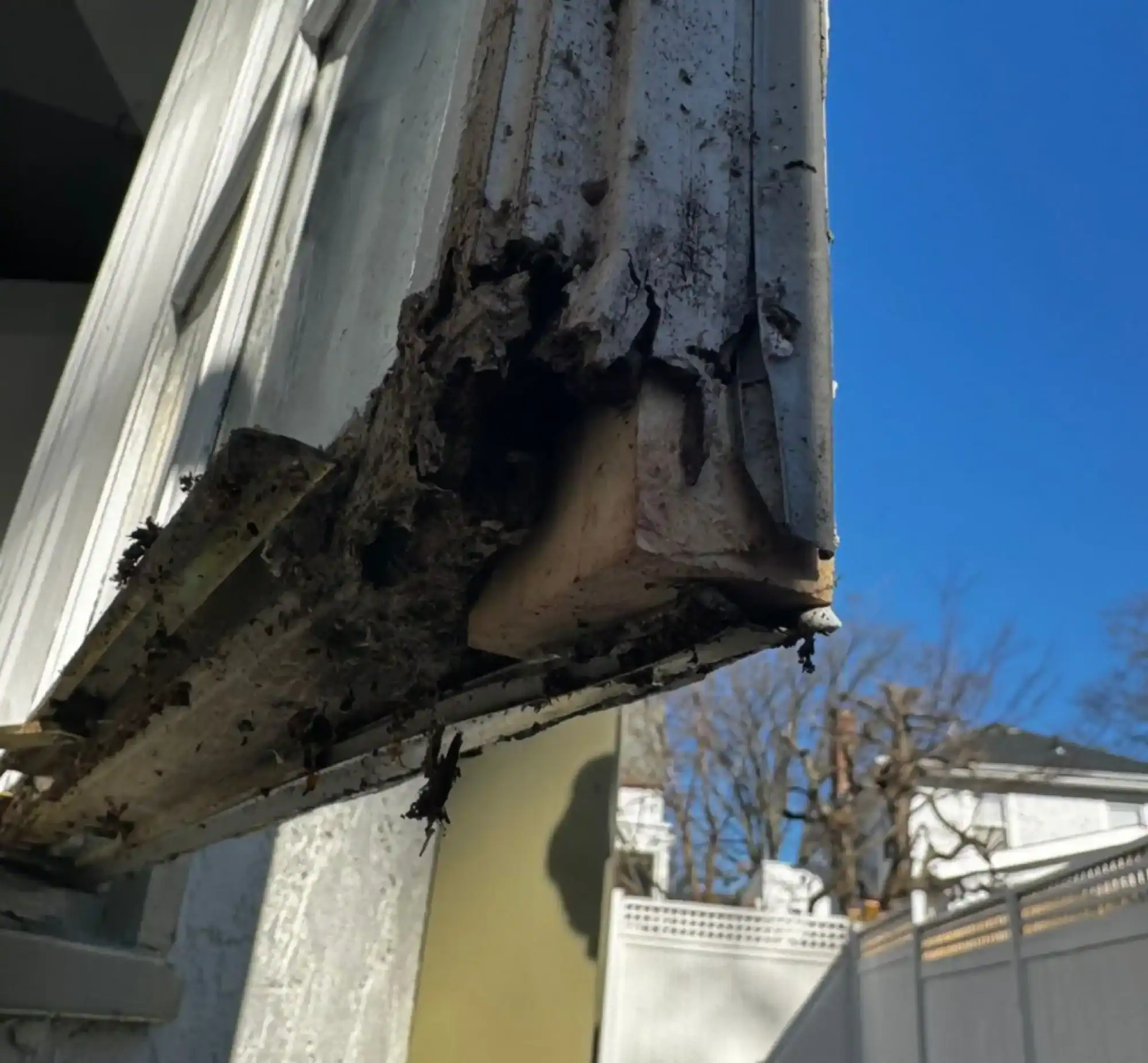
Entry door frames fail at the base of the side jambs and at the threshold sill for exactly the same reasons window frames fail: end grain exposure, trapped moisture, and deferred maintenance. But the structural consequences arrive faster because a door frame carries the mechanical load of the door's operation. A side jamb with active rot at its base will allow the door to rack out of alignment over time, compromising the latch engagement and weatherstrip seal before the rot is even visible to the homeowner. Our door adjustment service frequently diagnoses rot at the jamb base as the root cause of a door that will not latch or seal correctly.
Window Rot Repair in Fairfield County vs. Full Replacement
Most homeowners confronting visible window rot assume the window is finished. The frame looks bad, the corner has collapsed, the paint is gone. What that instinct misses is the actual question: is the rot confined to one section of a structurally larger assembly, or has it compromised the assembly itself? Those are two completely different situations with completely different correct answers.
A window frame is a system of sill, side jambs, head jamb, stops, and sash, each a separate component, each independently repairable when the failure has not crossed into adjacent members. A sill that has rotted through completely can be replaced while the side jambs, head jamb, and sash remain exactly as they are. The window does not need replacing. The sill does. Treating them as the same thing is what makes rot repair seem more expensive and disruptive than it actually is.
Timing matters too. Rot repair scoped correctly today costs a fraction of what the same job costs deferred by two seasons, because the fungal activity driving the deterioration does not stop between estimates. The sill that needs a Dutchman insert now needs a full jamb section replacement by spring. The threshold that needs sealing now requires a structural jamb rebuild by the following winter. Replacement starts looking economical not because it is ever the right answer for a localized failure, but because the repair scope has grown to the point where the cost differential narrows.
A window frame is a system of sill, side jambs, head jamb, stops, and sash, each a separate component, each independently repairable when the failure has not crossed into adjacent members. A sill that has rotted through completely can be replaced while the side jambs, head jamb, and sash remain exactly as they are. The window does not need replacing. The sill does. Treating them as the same thing is what makes rot repair seem more expensive and disruptive than it actually is.
Timing matters too. Rot repair scoped correctly today costs a fraction of what the same job costs deferred by two seasons, because the fungal activity driving the deterioration does not stop between estimates. The sill that needs a Dutchman insert now needs a full jamb section replacement by spring. The threshold that needs sealing now requires a structural jamb rebuild by the following winter. Replacement starts looking economical not because it is ever the right answer for a localized failure, but because the repair scope has grown to the point where the cost differential narrows.
Assessing Rotten Window Frames Fixes
Rot assessment is a probe exercise, not a visual one. The visible deterioration is the end point of a failure that started further in. We probe every section of the frame including sill face, corner joints, side jambs, and blind areas behind cladding before quoting any scope. What the probe finds determines the repair method, material selection, and whether the adjacent glass needs to come out during the rebuild.
Epoxy vs. Timber for Window Rot Repair
Two-part epoxy filler is correct for non-structural voids where the surrounding wood is sound and the repair carries no load. Timber Dutchman repair is required when rot has failed a structural section: a full sill depth, a load-bearing corner joint, or a door jamb base where hardware is anchored. Installing epoxy in a location that requires timber produces a repair that looks correct but fails under seasonal load within two seasons.
Rotten Door Frames Repair in Greenwich, CT
Door frame rot follows the same failure sequence as window rot but carries a faster structural consequence. A side jamb with active rot at its base allows the door to rack out of alignment, compromising latch engagement and weatherstrip contact before the rot is even visible. By the time the homeowner notices the door sticking or drafting, the jamb has already moved. Our door adjustment service in Westchester County addresses the alignment consequence, but the rot in the jamb is what drives it and must be resolved first.
Prestige Window and Door Repair
Prestige Window and Door Repair has been operating from Greenwich, CT since 2014, carrying a 5-year workmanship warranty on all structural repairs and a 10-year warranty on all glass unit installations. Over more than a decade and 6,000+ completed projects across Fairfield County and Westchester County, the team has built a repair-first approach grounded in what the housing stock in this region actually requires.
Every rot repair job Prestige Window and Door Repair takes on in Fairfield County and Westchester County is backed by the same standard: a free on-site probe assessment before any scope is quoted, borate treatment as a non-negotiable step in every repair, and a 5-year workmanship warranty on the finished work. Those are not selling points. They are the minimum that makes a rot repair worth doing. A repair without a proper assessment misses concealed damage. A repair without borate treatment leaves active fungal spores in the surrounding wood. A repair without a warranty is a contractor who already knows the work may not last. For a documented example of what this approach looks like in practice, see our rotten window repair project in Hartsdale, NY — a corner rot failure on an older Westchester frame taken from full structural collapse through to a finished repair that restored the window to correct operation.
Every rot repair job Prestige Window and Door Repair takes on in Fairfield County and Westchester County is backed by the same standard: a free on-site probe assessment before any scope is quoted, borate treatment as a non-negotiable step in every repair, and a 5-year workmanship warranty on the finished work. Those are not selling points. They are the minimum that makes a rot repair worth doing. A repair without a proper assessment misses concealed damage. A repair without borate treatment leaves active fungal spores in the surrounding wood. A repair without a warranty is a contractor who already knows the work may not last. For a documented example of what this approach looks like in practice, see our rotten window repair project in Hartsdale, NY — a corner rot failure on an older Westchester frame taken from full structural collapse through to a finished repair that restored the window to correct operation.
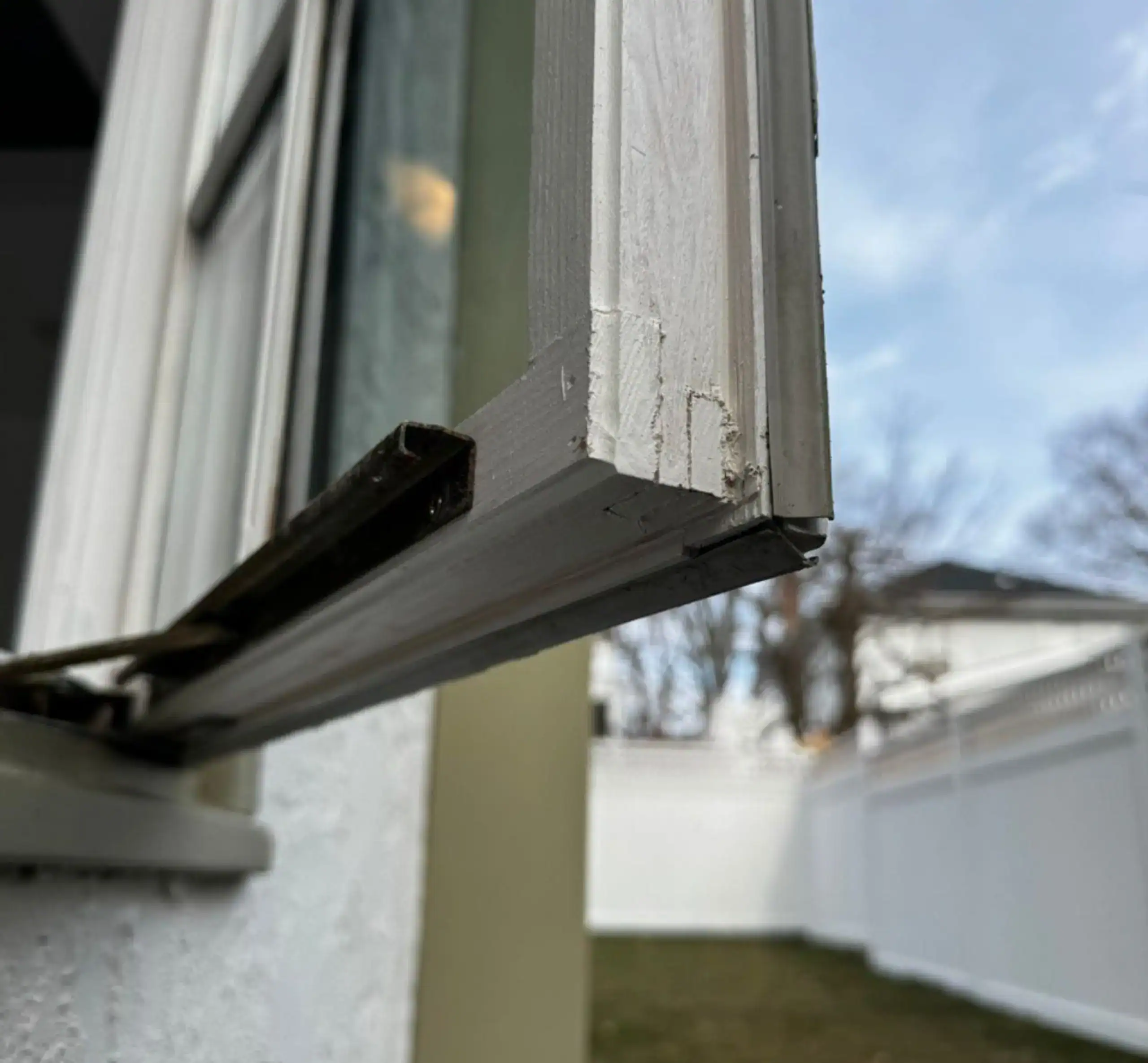
Our window contractors at Prestige Window and Door Repair have assessed and repaired Andersen, Marvin, and Pella wood and clad-wood frames from the 1960s through today, on historic properties where original windows must be preserved, and on standard residential frames across every community in the service area. From Greenwich and Cos Cob through Darien, New Canaan, Norwalk, and Stamford in Connecticut, and across Westchester County from Scarsdale and White Plains through Tarrytown, Irvington, and Larchmont. Every job in every one of those communities is handled to the same standard as the one before it.
And Google reviews reflect what happens when the assessment comes before the proposal and the scope is never inflated to justify a higher ticket. The estimate is free, the assessment is honest, and the repair is warrantied. Call 203.948.4777 and schedule your trusted rotten window repair in Greenwich, CT or across Fairfield County.
And Google reviews reflect what happens when the assessment comes before the proposal and the scope is never inflated to justify a higher ticket. The estimate is free, the assessment is honest, and the repair is warrantied. Call 203.948.4777 and schedule your trusted rotten window repair in Greenwich, CT or across Fairfield County.
The Real Cost of Rot Repair in Greenwich, CT
Rot repair deferred for one season is almost always more expensive than rot repair done when the problem was first noticed. The fungal activity that drives wood deterioration does not pause between rain events. It continues working through the wood fiber whenever moisture and temperature conditions are favorable, which in Fairfield County and Westchester County means most of the year outside of the coldest winter weeks. The biology of rot does not care about a homeowner's schedule or budget cycle.
The economics work in one direction only. A sill that needed a surface epoxy repair in October becomes a full sill replacement by April. A corner joint that needed a Dutchman insert the first summer becomes a jamb section replacement two winters later. What started as a half-day repair becomes a full-day job. What started as a targeted material cost becomes a scope that includes adjacent framing, new glass removal and reinstallation, and in some cases interior trim work. None of that additional scope existed when the rot was first noticed. All of it was created by the interval between noticing and acting.
Wood rot is caused by fungal organisms that digest cellulose and lignin in wood fiber. Those organisms spread through the wood via mycelium, thread-like structures that extend well beyond the visibly deteriorated area. When a sill face rots through, the fungal network has already extended into the end grain of the side jambs at the sill junction, into the rough sill framing below the finish sill, and in some cases into the structural framing behind the jamb. This is why a repair that removes only the visible deterioration and leaves the adjacent end grain untreated fails at its boundaries within a season or two. The fungal activity that was present but not yet visible simply continues from where it was left. Borate treatment applied to every surface adjacent to the removed rot is what closes that boundary. Without it the repair has a predetermined expiry date.
Aluminum and vinyl-clad wood window frames, common in properties across Norwalk, Riverside, Old Greenwich, and Rye, conceal rot behind their cladding until the deterioration is severe. The cladding provides a weathering surface that hides the wood beneath from visual inspection, and the channel where the cladding meets the wood traps moisture against the wood face rather than allowing it to drain. Homeowners and many contractors assess a clad-wood frame from the outside, see intact cladding, and conclude the frame is sound. The probe assessment tells a different story. The wood behind intact-looking cladding can be fully deteriorated while the cladding remains visually undamaged. We remove cladding sections as part of the free estimate assessment on any clad-wood frame where rot is suspected, not as a separate billable scope.
Casement windows with clad-wood frames are particularly susceptible to this pattern because the cladding on a casement sash wraps tightly around the bottom rail, creating a sealed channel at exactly the point where water collects. Awning windows present a similar concealment problem at the top rail, where the hinge hardware creates a penetration point through the cladding that allows water ingress directly into the wood beneath. Tilt and turn windows and French doors with wood or clad-wood frames show the same failure at the bottom corner joints, where the frame meets the threshold and water accumulates seasonally. The common factor across all of these window types is that the rot has been developing behind intact-looking surfaces for long enough that by the time it is noticed, the scope is already larger than it needed to be. That gap between when the rot started and when it was found is entirely preventable with periodic probe assessment, which costs nothing at Prestige Window and Door Repair. Call 203.948.4777 to hire best local window contractors for door or window rot repair in Greenwich and beyond.
Wood rot is caused by fungal organisms that digest cellulose and lignin in wood fiber. Those organisms spread through the wood via mycelium, thread-like structures that extend well beyond the visibly deteriorated area. When a sill face rots through, the fungal network has already extended into the end grain of the side jambs at the sill junction, into the rough sill framing below the finish sill, and in some cases into the structural framing behind the jamb. This is why a repair that removes only the visible deterioration and leaves the adjacent end grain untreated fails at its boundaries within a season or two. The fungal activity that was present but not yet visible simply continues from where it was left. Borate treatment applied to every surface adjacent to the removed rot is what closes that boundary. Without it the repair has a predetermined expiry date.
Aluminum and vinyl-clad wood window frames, common in properties across Norwalk, Riverside, Old Greenwich, and Rye, conceal rot behind their cladding until the deterioration is severe. The cladding provides a weathering surface that hides the wood beneath from visual inspection, and the channel where the cladding meets the wood traps moisture against the wood face rather than allowing it to drain. Homeowners and many contractors assess a clad-wood frame from the outside, see intact cladding, and conclude the frame is sound. The probe assessment tells a different story. The wood behind intact-looking cladding can be fully deteriorated while the cladding remains visually undamaged. We remove cladding sections as part of the free estimate assessment on any clad-wood frame where rot is suspected, not as a separate billable scope.
Casement windows with clad-wood frames are particularly susceptible to this pattern because the cladding on a casement sash wraps tightly around the bottom rail, creating a sealed channel at exactly the point where water collects. Awning windows present a similar concealment problem at the top rail, where the hinge hardware creates a penetration point through the cladding that allows water ingress directly into the wood beneath. Tilt and turn windows and French doors with wood or clad-wood frames show the same failure at the bottom corner joints, where the frame meets the threshold and water accumulates seasonally. The common factor across all of these window types is that the rot has been developing behind intact-looking surfaces for long enough that by the time it is noticed, the scope is already larger than it needed to be. That gap between when the rot started and when it was found is entirely preventable with periodic probe assessment, which costs nothing at Prestige Window and Door Repair. Call 203.948.4777 to hire best local window contractors for door or window rot repair in Greenwich and beyond.
Andersen, Marvin, and Pella Rot Repair
The wood window brands most commonly requiring rot repair across the Prestige Window and Door Repair service area reflect the construction eras dominant in each community. Andersen wood and clad-wood double-hung and casement units installed in the 1970s and 1980s are the most frequent rotten window repair call in Greenwich, Darien, and Cos Cob. These units are structurally sound in their glass and hardware but showing sill face and corner joint deterioration consistent with 40 to 50 years of Fairfield County climate exposure. The Andersen 400 Series and 200 Series clad-wood frames from this era are particularly prone to cladding-concealed bottom rail rot, where the aluminum cladding remains intact while the wood beneath has been actively deteriorating for years.
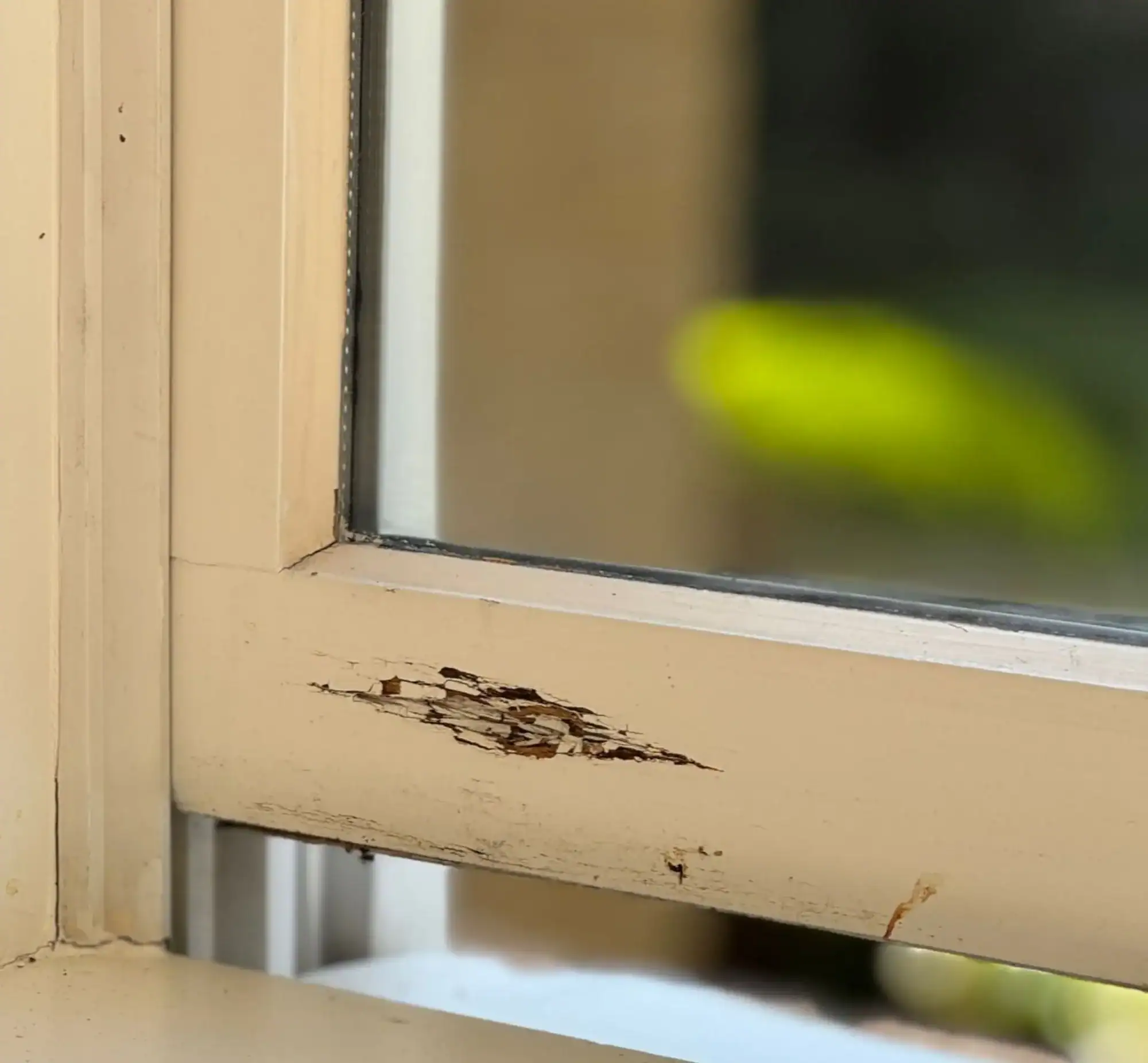
Marvin wood and clad-wood frames from the 1990s renovation wave appear frequently in rotten window repair calls across Scarsdale, Rye, Larchmont, and Mamaroneck in Westchester County. Marvin frames from this period typically present with cladding-concealed rot at the bottom rail and corner joint failure at the sill-to-jamb junction that is only confirmed through probe assessment. The exterior appearance of these frames frequently gives no indication of the extent of deterioration beneath the cladding surface, which is why visual assessment alone consistently underestimates the scope on Marvin clad-wood units.
Pella wood casements and double-hung windows are common rotten window frame repair calls across the full service area, from Stamford and Norwalk in Fairfield County through Harrison, Pleasantville, and Tarrytown in Westchester. Pella wood frames tend to present with corner joint failures and sill face deterioration that responds well to Dutchman timber repair when addressed before the rot tracks into the jamb sections. When Pella rot repair is deferred past the point where the sill has failed through its full depth, the scope typically expands to include sill replacement and glass removal, both of which add cost that a timely intervention would have avoided entirely.
Beyond the three major brands, properties in Bedford, Armonk, Purchase, and Pocantico Hills frequently contain Weather Shield, Kolbe, and unbranded original wood windows installed during earlier construction periods. These frames require assessment on their own terms rather than by brand specification, and in many cases the wood quality in these older unbranded units is superior to anything available in contemporary production. Rot repair on original pre-1960 wood frames in these communities is almost always the correct answer over replacement, provided the failure is structurally localized, which it typically is when the frame is original old-growth timber.
For a documented example of what rotten window frame repair looks like from initial assessment through to finished restoration, see our rotten window repair project in Darien, CT and our rotten window repair project in Hartsdale, NY, two confirmed portfolio projects covering different frame types, different rot extents, and different repair methods across the Fairfield County and Westchester service area.
Pella wood casements and double-hung windows are common rotten window frame repair calls across the full service area, from Stamford and Norwalk in Fairfield County through Harrison, Pleasantville, and Tarrytown in Westchester. Pella wood frames tend to present with corner joint failures and sill face deterioration that responds well to Dutchman timber repair when addressed before the rot tracks into the jamb sections. When Pella rot repair is deferred past the point where the sill has failed through its full depth, the scope typically expands to include sill replacement and glass removal, both of which add cost that a timely intervention would have avoided entirely.
Beyond the three major brands, properties in Bedford, Armonk, Purchase, and Pocantico Hills frequently contain Weather Shield, Kolbe, and unbranded original wood windows installed during earlier construction periods. These frames require assessment on their own terms rather than by brand specification, and in many cases the wood quality in these older unbranded units is superior to anything available in contemporary production. Rot repair on original pre-1960 wood frames in these communities is almost always the correct answer over replacement, provided the failure is structurally localized, which it typically is when the frame is original old-growth timber.
For a documented example of what rotten window frame repair looks like from initial assessment through to finished restoration, see our rotten window repair project in Darien, CT and our rotten window repair project in Hartsdale, NY, two confirmed portfolio projects covering different frame types, different rot extents, and different repair methods across the Fairfield County and Westchester service area.
THE MOST POPULAR QUESTIONS
Can window rot be repaired without replacing the whole window?
Yes, in most cases. If the rot is structurally localized, confined to the sill face, a corner joint, or the base of a jamb, targeted repair is the correct scope. We probe the full frame at the estimate visit and only recommend replacement when rot has spread through multiple structural members or the sash itself cannot be salvaged.
How do I know if my clad-wood window frame has rot behind the cladding?
Softness when pressed against the cladding, paint lifting at the cladding edge, or a door or window that has suddenly started sticking or racking are all indicators. The only reliable confirmation is removing the cladding section and probing the wood beneath — which we do as part of the free estimate visit, not as a separate charge.
What is borate treatment and why does it matter for rot repair in CT?
Borate is a fungicide that penetrates wood fiber and halts fungal activity in the wood adjacent to removed rot. Without it, fungal spores remaining in the surrounding wood will reactivate once moisture returns and migrate into the repaired area. It is the step that determines whether a rot repair lasts five years or fifteen.
Do you repair rotted door frames as well as window frames in Fairfield County?
Yes. Entry door frame rot at the base of the side jambs and threshold area is a common repair scope across the Prestige Window and Door Repair service area. Door frame rot frequently presents first as a door that sticks, racks, or will not latch — symptoms that are caused by structural movement in the jamb as the rot progresses. We address the rot and then verify door alignment before the job is closed.
How much does rotten window repair cost in Greenwich, CT or Westchester County?
Cost depends on the extent of the rot, the repair method required (epoxy fill vs. timber Dutchman vs. full sill or jamb replacement), and the number of frames involved. We give exact pricing at the free on-site estimate after the probe assessment. Call 203.948.4777 to schedule your window or door repair in Greenwich, CT.
 Rating
4.8


Based on 650 reviews
Nilson Nain
The crew did a great job replaced rotted wood sashes on Marvin windows. They were very knowledgeable as well as being skilled at their craft. Very happy hired Prestige to fix our windows.In addition they adjusted our old door as complementary service.
Jean Marie Paolo Victor
Our Pella window glass shattered due to extreme cold. I called Prestige Window works They came the next day give reasonable price and within few days the glass was replaced and now it’s as new. Very knowledgeable crew.
Diana Stinaroff
Excellent work by Prestige Window! I had a large window replaced on a commercial property as well as to fix a glass security door on the hinges and they did an exceptional job.
Balwinder Singh
We hire Prestige to install Pella door that we bought before.Even those that door was little bit of the sizes Prestige guys did fabulous job.Clean, professional crew.
Definitely will recommend.
Lee Riech
We used Prestige to replace our screens and fix our window. They did a great job and were professional and well priced. We highly recommend them and will use them again
Anne
Super professional and friendly. Accommodating our need to have the window repaired quickly. All the staff we dealt with were amazing. Happy with our new window.
Need a Window or Door Makeover in Connecticut?
Let our on-site experts handle all your repair and replacement needs!
Let our on-site experts handle all your repair and replacement needs!