




Rotten Window Repair in Irvington, NY
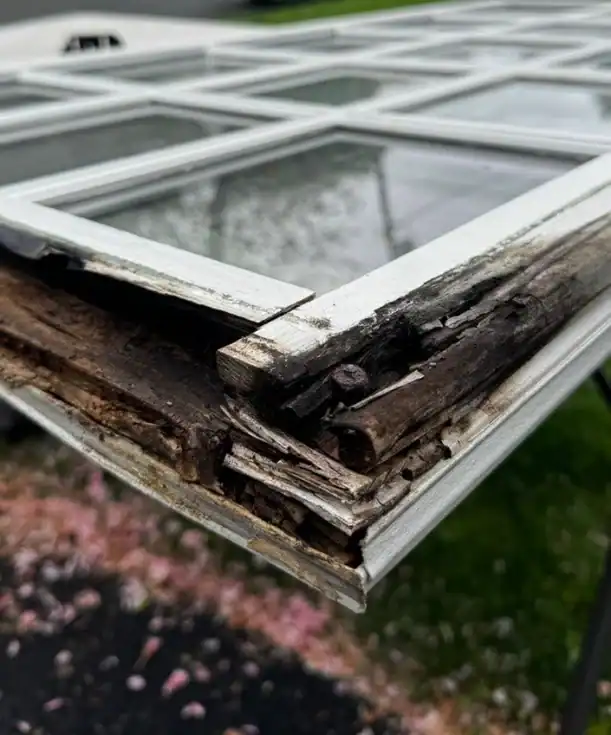
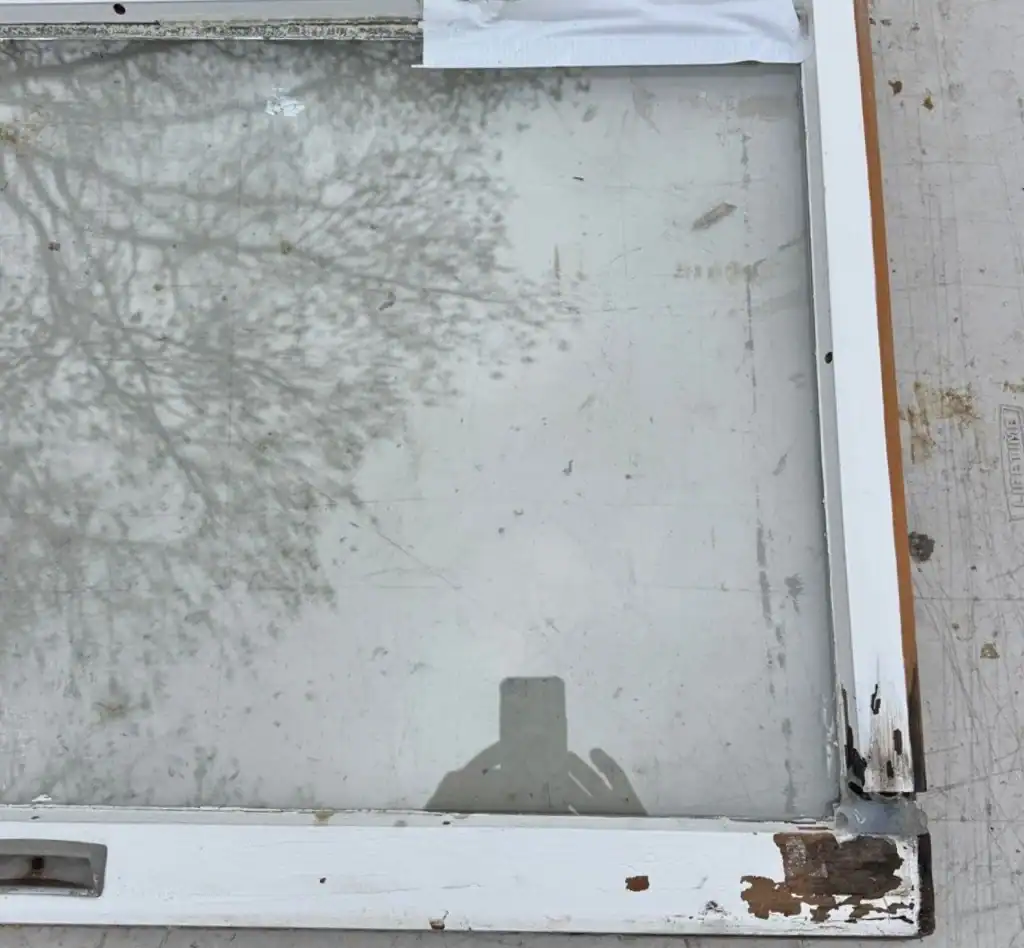
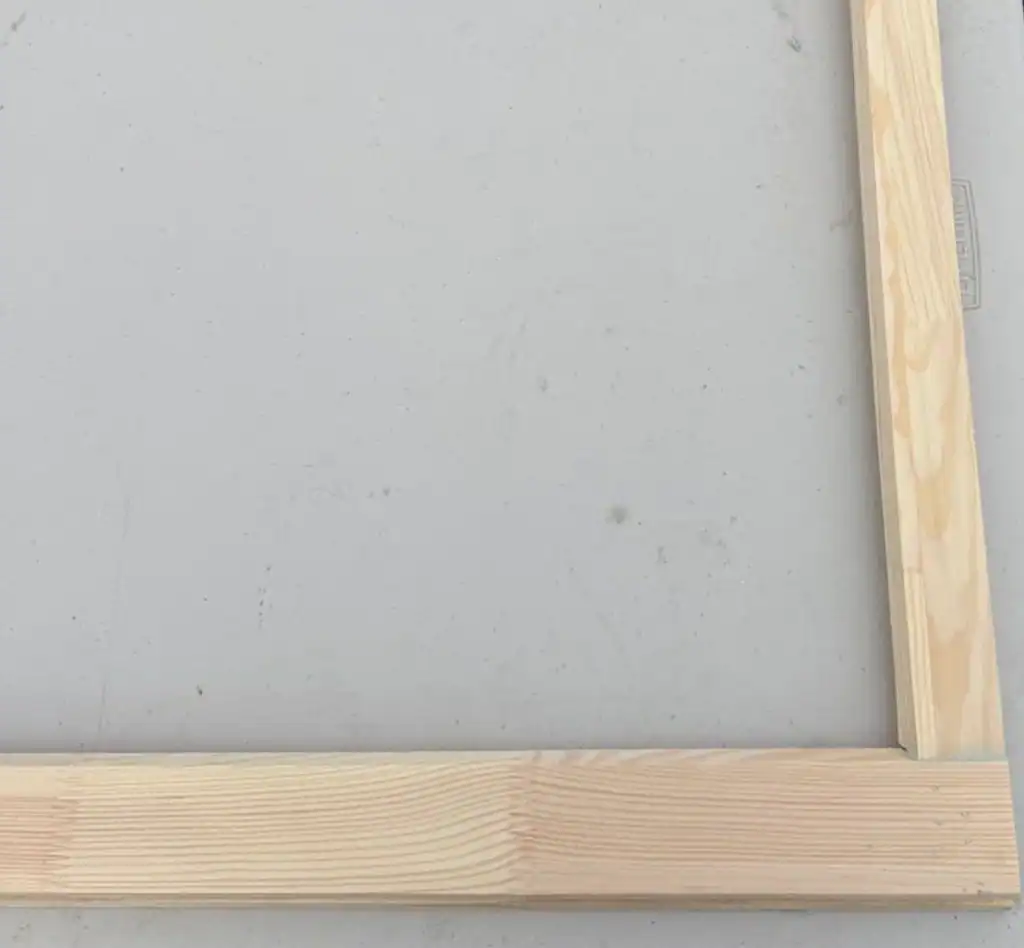
Most rot repair calls come in because something is visibly wrong at the sill or the frame. This Irvington job came in because a sash had been removed for painting and the lower corner, once examined closely at ground level, had no structural integrity left. The before photo shows the sash laid flat outside: white painted wood frame, glass still intact, and the lower right corner completely collapsed. The paint surface at the corner had held together long enough to obscure how far gone the wood underneath was. The after photo shows the same sash with the corner rebuilt to bare new timber, sharp geometry restored at the rail-to-stile junction, ready for priming and reinstatement.
We have been serving Irvington and Westchester County since 2014 and are holding Connecticut Home Improvement Contractor License HIC.070717. Sash corner rot in Irvington is not a rare call. The village’s position directly on the Hudson River, combined with the mature tree canopy throughout the historic district and the deeply shaded lots along the bluff streets west of Broadway, creates ambient moisture conditions that work on every exposed wood joint in the village continuously. Corner joints are where that moisture has the most leverage.
Why Window Sash Corners Fail Before Everything Else
A window sash is a mortise-and-tenon assembly. The horizontal rails meet the vertical stiles at corner joints where the wood grain changes direction and end grain is exposed inside the joint. End grain absorbs moisture at a rate many times higher than face grain. In a correctly maintained sash, the paint film covering that corner joint seals the end grain against moisture entry. When the paint film breaks down at the corner, which happens at every corner joint eventually, moisture enters the end grain directly.
The enclosed geometry of a sash corner joint is what turns a minor paint failure into a major rot problem. Once moisture is inside the joint, it cannot escape between rain events the way it would on an open face grain surface. The joint retains moisture, stays damp through the dry periods that would otherwise allow the wood to recover, and provides ideal fungal conditions continuously. In Irvington’s river-adjacent climate, as our window technician Andrew explains, a corner joint paint failure that might remain stable for three or four years in an inland Westchester location can progress to full structural collapse within 18 months.
What makes this failure mode particularly problematic is how well paint conceals it. The paint film at a sash corner is flexible enough to bridge a void that is developing underneath it. The corner can look sound from a normal viewing distance while the wood inside the joint has completely lost structural integrity. The only reliable way to identify the true extent of sash corner rot is to probe it directly, which is exactly what this Irvington assessment involved once the sash was out of the frame and accessible from all sides.
The Irvington Dimension: Historic Sashes Worth Saving
Irvington’s housing stock is unusual in Westchester County for the proportion of original pre-1940 wood windows still in active service. The village’s National Register Historic District, the Gilded Age estate properties along the river bluffs, and the Victorian and colonial revival homes throughout the residential streets east of Broadway all contain wood sashes that represent a level of material quality simply not available in contemporary production. Old-growth timber, dense grain, mortise-and-tenon joinery — these are sashes built to last for centuries with correct maintenance, and they are worth repairing.
The alternative that most contractors propose for a sash in the condition shown in the before photo is full window replacement. That recommendation makes economic sense for the contractor and almost no sense for the homeowner with an original wood window in a historic Irvington property. A correctly rebuilt sash corner on a structurally sound original sash will outlast any contemporary vinyl or aluminum replacement. The sash itself, once rebuilt and properly finished, returns to service as the original component it always was. For properties in Irvington’s historic district, maintaining original windows is not just a preservation preference — it is the standard expected by the Secretary of the Interior’s Standards for Rehabilitation that govern federally assisted historic properties. Our historic window and door restoration service covers the full scope of preservation-standard work for these situations.
How the Sash Corner Was Rebuilt
The sash was removed from the window opening and assessed at ground level, which is the correct approach for a corner rebuild. Working with the sash horizontal allows precise measurement of the damage extent, clean access to the corner joint from all faces, and accurate preparation of the junction between surviving sound wood and the repair material.
All deteriorated wood was removed back to sound material. On a sash corner this means excavating the joint carefully: removing the failed rail end, clearing the compromised tenon, and probing the surviving stile for any rot migration along the grain beyond the visible damage area. Borate fungicide was applied to all exposed surfaces and allowed to penetrate before any repair material was introduced. Skipping the borate treatment on a corner joint repair is the single most common reason these repairs fail early — the fungal network in the wood adjacent to the visible rot continues migrating into the repair material once moisture returns if it has not been neutralized.
The corner was rebuilt using rot-resistant timber matched to the original rail and stile profiles, bonded with marine-grade epoxy, and mechanically fastened to the surviving sash frame. The joint geometry was restored to the original corner angle precisely — a sash corner that is rebuilt out of true will rack slightly in the frame and prevent the window from closing flush against the stops. The rebuilt corner was left at bare wood in the after photo, ready for oil-based primer penetration before the topcoat is applied. The glass remained in the sash throughout the entire process.
The window recaulking at the sash perimeter seal was addressed before reinstatement, and the balance system was checked on reinstall.
Rotten Window Sash Repair in Irvington & Westchester County
We handle rotten window repair across Irvington, Tarrytown, Scarsdale, Larchmont, and White Plains. Homeowners searching for rotten window sash repair Irvington NY, wood sash corner rot Westchester, or historic window repair in Irvington can reach us at 203.948.4777 for a free on-site estimate.

Sash Preserved, Not Replaced
Original wood sash with sound glass and structurally intact stiles rebuilt at the corner only. No new window, no disposal of original material worth keeping.
Borate Treatment Before Rebuilding
Every rot repair includes professional fungicide treatment of adjacent wood before any repair material goes in. The step that determines whether the repair lasts five years or twenty.
Historic Irvington Experience
Over 10 years working on pre-1940 wood sashes in Irvington’s historic district and Hudson River estate properties. We know what these windows are and how to repair them correctly. CT License HIC.070717.
View our before and after photos


THE MOST POPULAR QUESTIONS
Let our on-site experts handle all your repair and replacement needs!
other services we provide
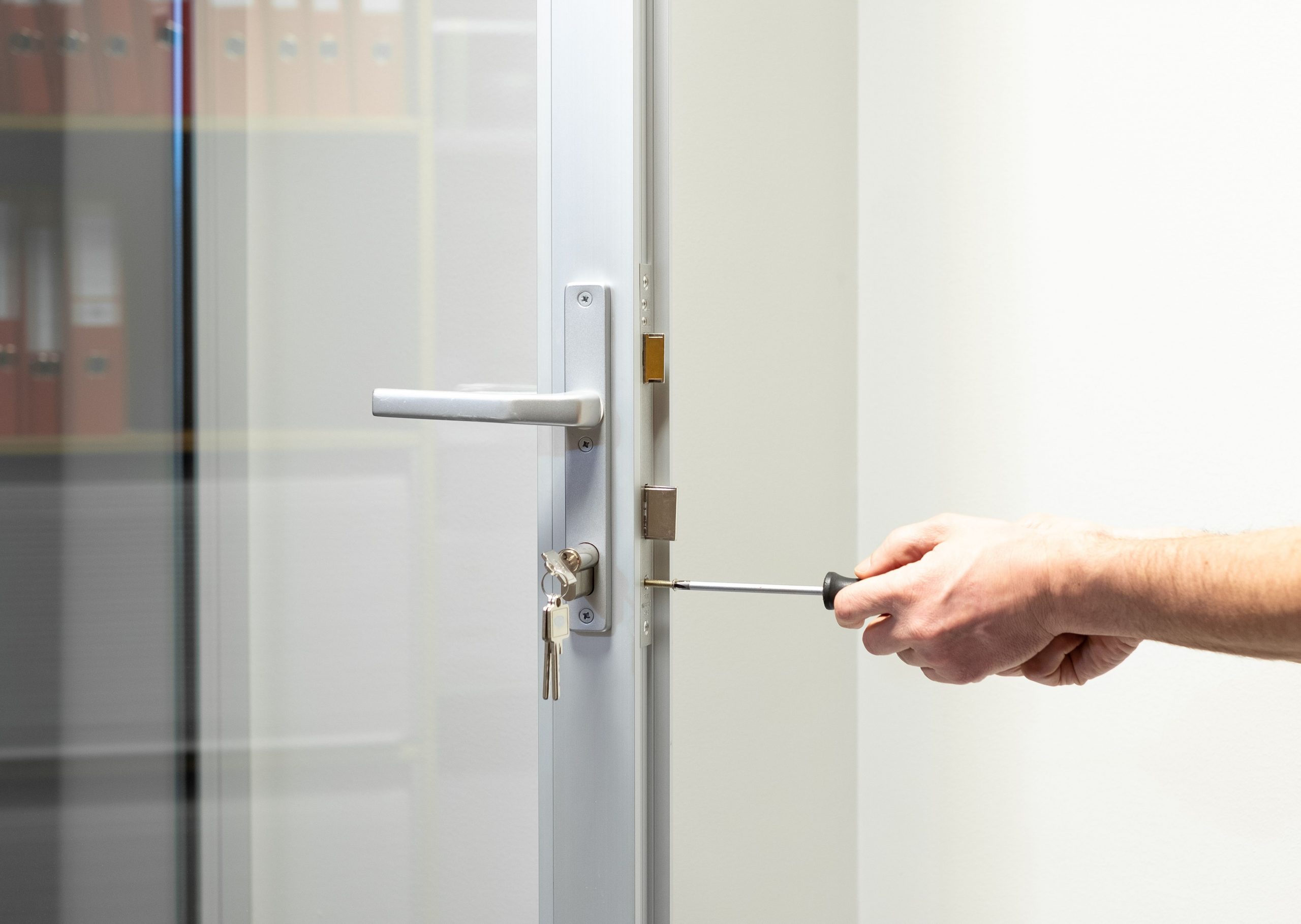
Storm Door Installation and Adjustment
Prestige Window Works ensures that your storm door closes tightly, operates smoothly, and provides the intended level of protection.
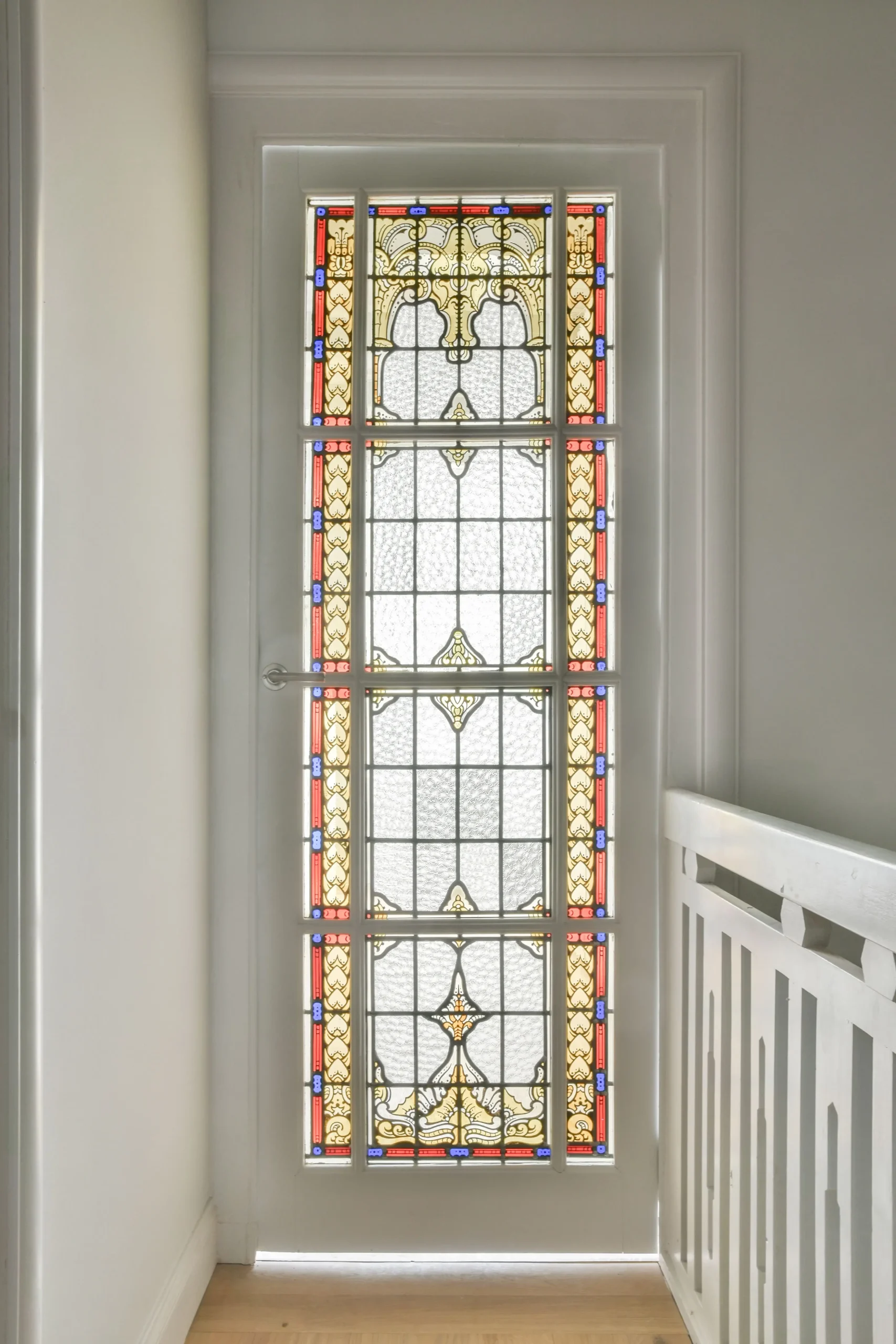
Stained Glass Windows
Bring a touch of elegance and artistry to your home or your business with stained glass window services from Prestige Window Works.
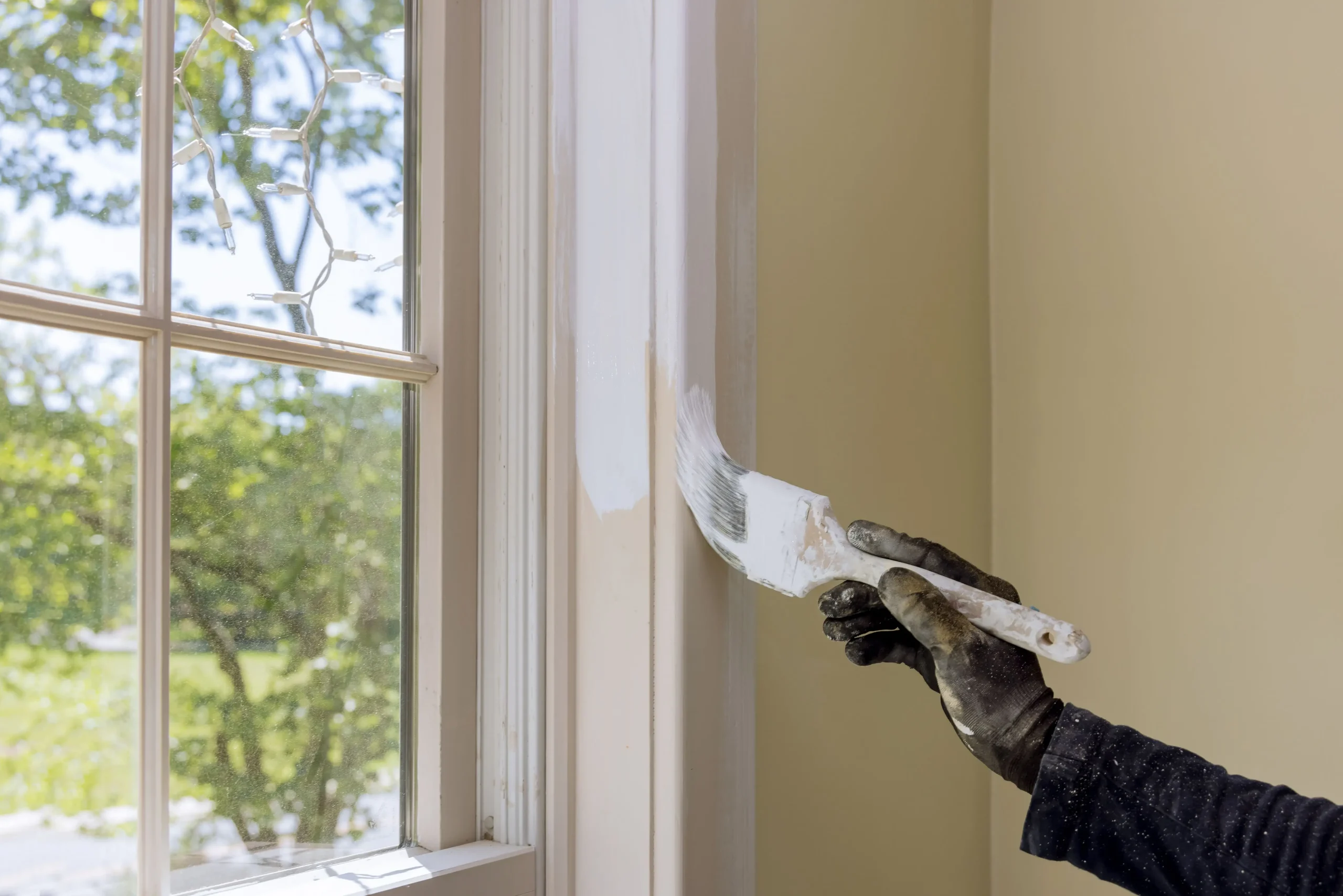
Window Reglazing
Imagine looking through a window that is crystal clear and well-sealed, providing not just a beautiful view but also superior insulation. Learn more how to achieve this!
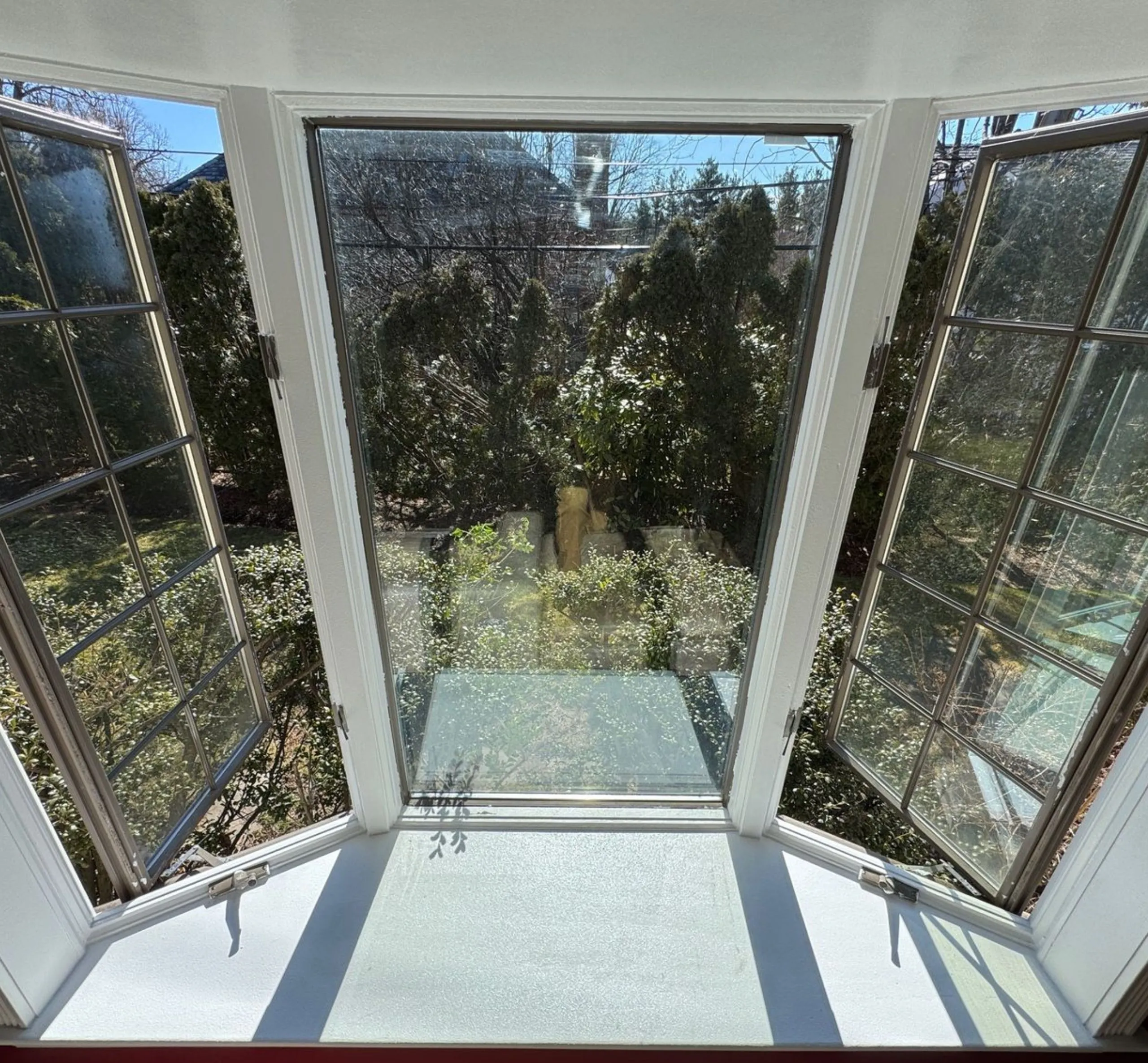
Wood Window and Door Repair
Expert wood door & window repair in Fairfield County and Westchester County. Restore original windows without unnecessary replacement.
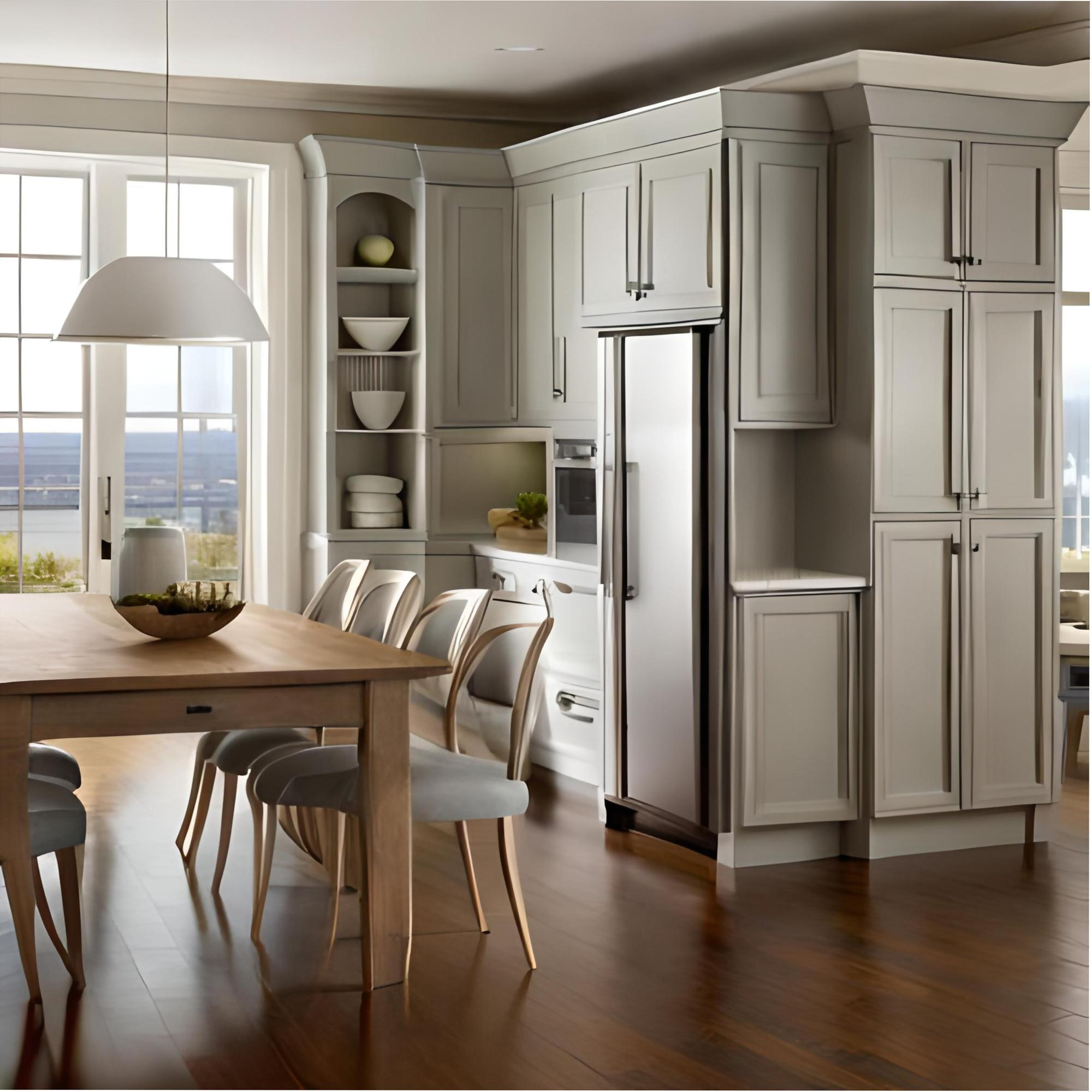
Kitchen Cabinet Doors Adjustment
Experience the satisfaction of beautifully aligned cabinet doors that enhance both function and visual appeal. Transform your kitchen!