




Awning Window Installation: A Step-by-Step Replacement Guide
Understanding Awning Windows: Your Guide to Installation
When considering window replacement, getting the awning windows installation right is key. Proper installation ensures your new windows work as they should. It also means they will last for many years.
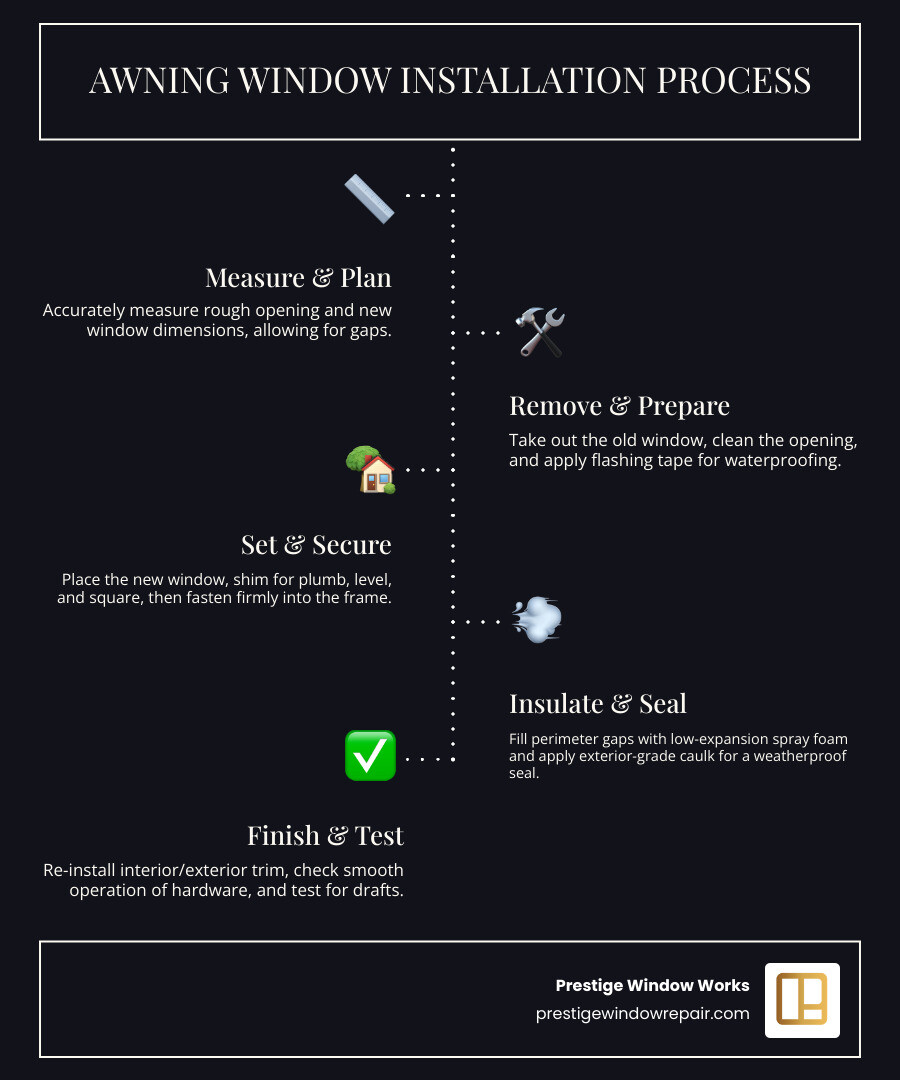
Here are the 7 key stages of awning window installation:
- Measure: Carefully measure your opening and the new window.
- Remove: Take out the old window and its frame.
- Prepare: Clean and flash the rough opening.
- Set: Place and shim the new window level and plumb.
- Secure: Fasten the window firmly into the frame.
- Insulate: Fill gaps with low-expansion foam.
- Finish: Seal exterior and replace trim.
Awning windows hinge at the top and open outwards from the bottom. This design is great for ventilation. You can even enjoy fresh air when it’s raining. These windows can also make your home much more energy-efficient.
But to enjoy these benefits, the installation must be precise. A poorly installed window can cause drafts, leaks, and higher energy bills. It can also lead to early damage. This guide will walk you through each step. We will cover everything from preparation to the final touches.
As Andrew Lukas, owner of Prestige Window and Door Repair, I’ve dedicated my career to ensuring windows and doors perform their best. My team and I specialize in door and window repair in Mamaroneck, NY, and surrounding areas, providing honest assessments and custom solutions for everything from wood window restoration to complex awning windows installation.
Before You Begin: Essential Prep for Your Awning Window Project
Before we dive into the nitty-gritty of installation, proper preparation is crucial. Think of it as laying the foundation for a masterpiece – the more solid the prep, the more beautiful and functional the result. This stage isn’t just about gathering tools; it’s about meticulous planning and ensuring a safe and efficient process.
Essential Tools and Materials
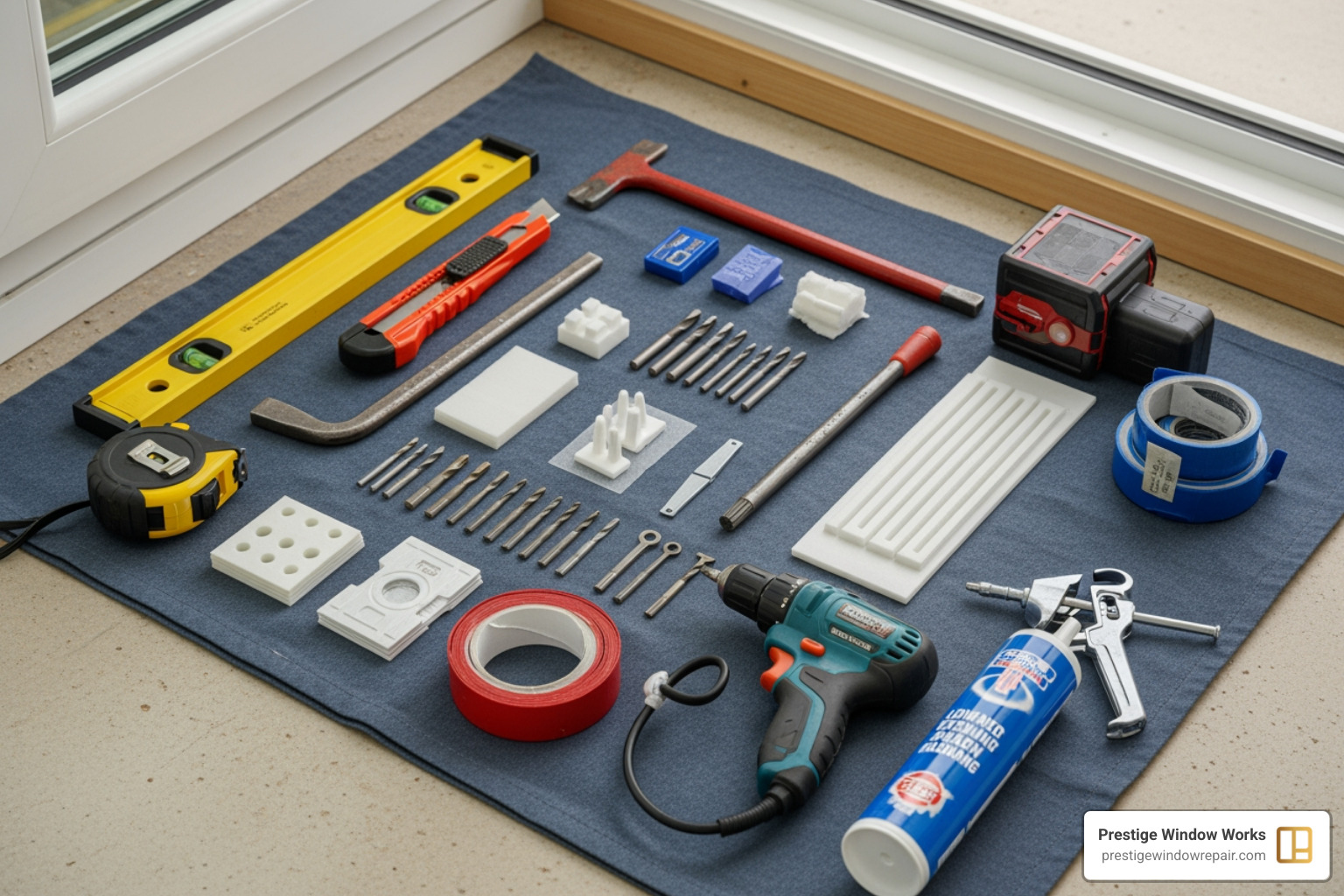
Having the right arsenal of tools and materials makes all the difference. It saves time, prevents frustration, and ensures a professional-grade awning windows installation near me in Greenwich, CT. Here’s what we recommend having on hand:
- Safety Gear: Safety glasses and sturdy work gloves are non-negotiable. We only have one set of eyes and hands!
- Measurement Tools: A reliable tape measure (measure twice, order once!), a 4-foot level, and a plumb bob or laser level for accuracy.
- Removal Tools: A pry bar, utility knife, reciprocating saw (for stubborn nails and screws), and a hammer.
- Drilling & Fastening: A power drill with various bits (e.g., 3mm, 13/64”, 1/8”, 3/16” masonry, 5/16” masonry, 1/4”x6” for specific applications), and #8 x 3-inch pan head screws are standard for securing the window.
- Shimming & Support: Shims (plastic or wood) and packers are essential for leveling and squaring the window.
- Sealing & Insulation: Exterior-grade caulk, a caulk gun, flashing tape, backer rod, and low-expansion spray foam.
- Miscellaneous: A mini pinch bar, staple gun and staples (if flashing is used), and a drop cloth to protect your work area. For larger windows, a second person is definitely on the “essential tools” list!
Critical Measurements and Preparation
Precision is our mantra when it comes to measurements. An improperly sized window can derail your entire project before it even begins. We always say, “measure twice, cut once,” but for windows, it’s “measure twice, order once!”
First, measure the rough opening. We’re looking for the width, height, and depth. For width, measure across the top, middle, and bottom. For height, measure from the sill to the header on both sides and in the middle. Always use the smallest measurement to determine your window size.
A key guideline is that the opening needs to be 20mm wider and 30mm higher than the product to allow for a square and plumb installation. This gives us crucial wiggle room for adjustments. Furthermore, we aim for approximately a 1/4″ gap around the perimeter. This gap is essential for shimming and insulation, allowing us to adjust for a perfectly plumb, level, and square installation.
Next, check for squareness. This is vital for proper window operation. Measure the opening diagonally from corner to corner. Ideally, both diagonal measurements should be the same. Being within a couple of millimeters, or 1/8” of each other, is generally acceptable. If the difference is greater, your opening isn’t square, and you may need to adjust the framing.
Finally, inspect the existing sill and framing for any signs of rot or damage. Installing a new window over compromised framing is a recipe for disaster. If we find soft or discolored wood, those sections must be replaced before proceeding. Addressing these issues now prevents costly problems down the line. If you’re unsure about the extent of the damage, our team at Prestige Window and Door Repair specializes in rotten window repair near me in Mamaroneck, NY and can provide expert assessment and solutions. Don’t forget to protect your work area with drop cloths to keep your home clean during the process.
Awning Windows Installation in Mamaroneck, NY: A Step-by-Step Process
With our tools gathered and measurements double-checked, it’s time for the main event: the awning windows installation. This process involves careful removal, meticulous preparation of the opening, and precise setting of the new unit. Let’s get started!
Step 1: Removing the Old Window
Out with the old, in with the new! Removing the existing window requires a systematic approach to avoid unnecessary damage to your home.
- Remove Interior Trim: Carefully score any paint lines around the interior trim with a utility knife to prevent chipping. Then, using a pry bar, gently remove the trim pieces. We always try to save these if they’re in good condition for reinstallation.
- Disconnect Hardware: Detach the crank operator and any other visible hardware. Many awning windows have a link arm and hinges that connect the sash to the frame; carefully unscrew these.
- Cut Fasteners: For older windows, the frame might be held in place by nails or screws buried beneath the siding or interior finishes. A reciprocating saw is excellent for cutting through these unseen fasteners, allowing the frame to be freed without excessive force.
- Pry Out the Old Frame: With the fasteners cut and hardware removed, carefully pry the old window frame out of the rough opening. This is where a helper comes in handy, especially for larger units.
- Clean the Opening: Once the old window is out, thoroughly clean the rough opening. Remove any loose debris, old caulk, insulation, or damaged wood. A clean slate is essential for proper flashing and sealing of your new window.
Step 2: Preparing the Rough Opening
This step is critical for preventing moisture intrusion and ensuring the longevity of your new window. Think of it as creating a waterproof envelope around the opening.
- Inspect and Repair: After cleaning, carefully inspect the rough framing for any signs of rot, water damage, or structural issues. The sill plate, in particular, should be level, structurally sound, and ideally have a slight slope to the exterior for water drainage. If repairs are needed, address them now. As mentioned earlier, we can assist with any necessary rotten home window repair near me in Mamaroneck, NY before proceeding.
- Apply Flashing Tape: This is your primary defense against water. We apply flashing tape in a “shingle-style” application, meaning each layer overlaps the one below it, directing water downwards and away from the house.
- Sill Flashing: Start with the sill. Apply a continuous piece of flashing tape across the bottom of the rough opening, extending up the jambs by at least 6 inches on each side. Ensure it adheres smoothly, without wrinkles or air bubbles.
- Jamb Flashing: Next, apply flashing tape up the side jambs, overlapping the sill flashing. Extend these pieces beyond the top of the rough opening.
- Head Flashing: Finally, apply flashing tape across the top header, overlapping the jamb flashing. This creates a continuous, watertight barrier. Proper flashing prevents moisture from entering the building envelope by deflecting water, which is key to avoiding structural rot or mold.
Step 3: A Guide to Awning Windows Installation: Setting and Securing
Now for the moment of truth: setting your new awning window into its prepared opening. This step demands patience and precision to achieve a plumb, level, and square installation.
- Apply Sealant Bead: Before placing the window, apply a continuous 3/8-inch bead of exterior-grade sealant along the inside edge of the rough opening, where the nailing flange (if present) or the back of the window frame will meet the flashing tape.
- Place the New Window: With a helper (trust us, it’s easier with two!), carefully lift the new window and place it into the opening. Make sure the handle is tightened and the window is closed. It should fit snugly but not be forced. If it doesn’t slide in easily, check for obstructions.
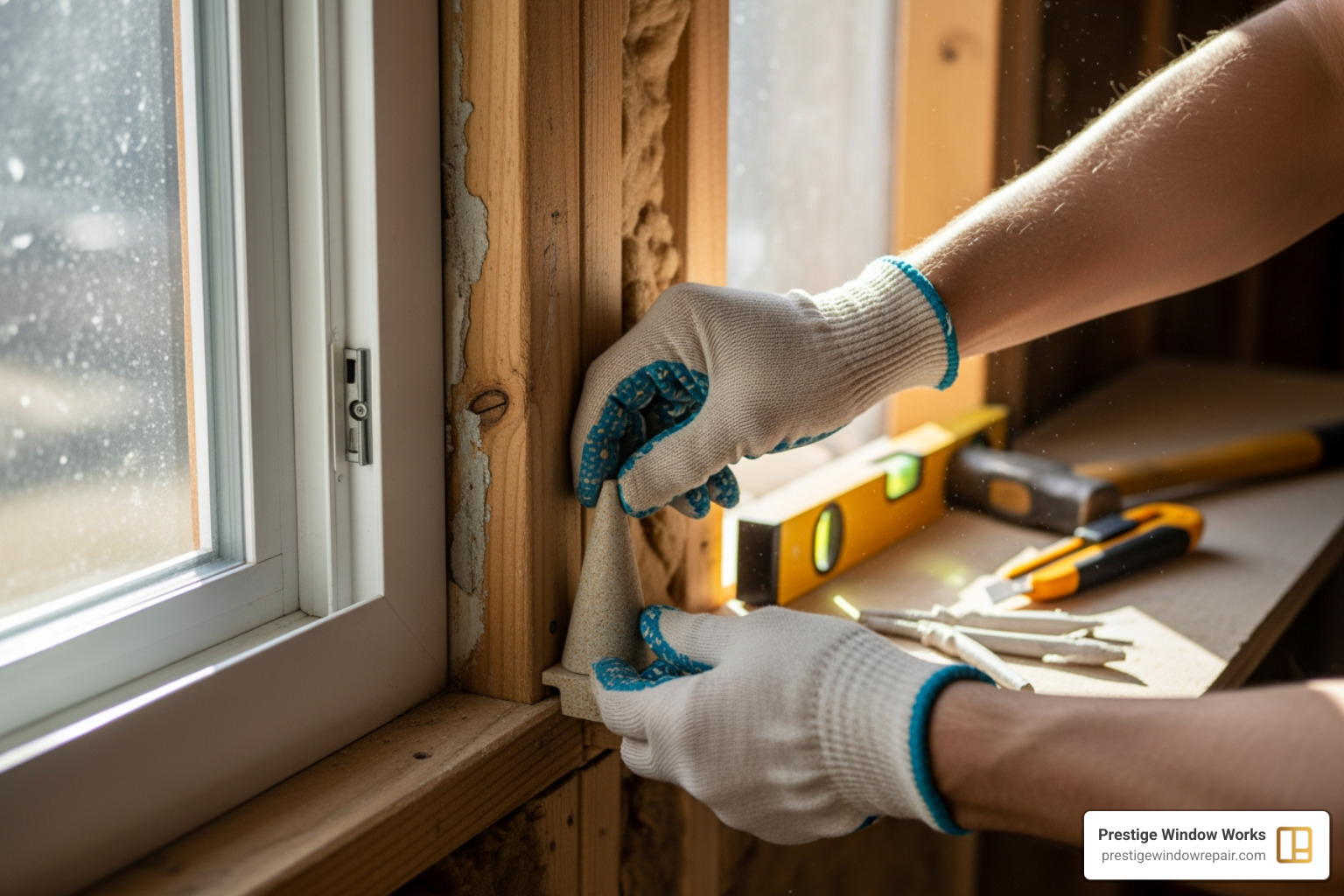
- Centering and Shimming: Center the unit within the rough opening, allowing for that crucial 1/4″ gap around the perimeter. Now, the shimming begins!
- Sill and Head: Shim the top and bottom frame members, starting at about 2 inches from either end, and then approximately every 16 inches on center. This ensures the window is level.
- Jambs: Shim the side frame members at approximately 24 inches on center. This makes the window plumb.
- Checking for Square: Use your level and re-check the diagonal measurements to confirm the window is perfectly square. We aim for shim spaces to be no more than 1/4” per side, ensuring a tight and stable fit.
- Checking Gaps: Once shimmed, visually inspect the exterior gap between the frame and sash for consistency. This confirms a square installation and proper sash operation.
- Fastening the Window: With the window perfectly positioned, it’s time to secure it. We typically use #8 x 3-inch pan head screws for this.
- Screw Placement: Screw through the frame into the stud at the shim locations. If there aren’t pre-punched installation holes, we drill holes 4” to 6” from each corner.
- Critical Caution: Do not screw through the top header or bottom sill directly. This can compromise the frame’s integrity and drainage.
- Tightening: Tighten the screws until snug, but be careful not to over-tighten, as this can distort the frame. Our goal is a secure hold without bowing the window.
Achieving a Perfect Window Seal: Insulation, Flashing, and Finishing
A beautifully installed window is only as good as its seal. This section focuses on ensuring your new awning window is energy-efficient and watertight, protecting your home from the elements.
Insulating for Maximum Energy Efficiency
Proper insulation around your new window is paramount for energy efficiency. It’s like giving your window a cozy, airtight hug.
- Low-Expansion Spray Foam: We use low-expansion spray foam to fill the gaps between the window frame and the rough opening. This type of foam is crucial because, unlike high-expansion foams, it won’t distort or bow the window jambs as it cures.
- Filling Gaps: Carefully apply the foam, filling all voids, but avoid over-filling. A little goes a long way, and too much can still put pressure on the frame. The goal is to create a continuous thermal barrier that blocks air leaks and prevents drafts.
- Importance of Insulation: An uninsulated gap is an open invitation for conditioned air to escape and unconditioned air to enter, driving up your energy bills. This insulation, combined with high-quality glass, significantly boosts your window’s thermal performance. If you’re looking to upgrade your glass for even better insulation, explore our services for window glass replacement near me in Mamaroneck, NY.
Exterior Sealing and Finishing Touches
Once the window is secure and insulated, the final sealing steps create a robust, weatherproof barrier.
- Exterior-Grade Caulk: Apply a continuous bead of exterior-grade caulk around the entire perimeter where the window frame meets the siding or exterior trim. This is your first line of defense against moisture.
- Tooling the Caulk Bead: After applying, “tool” the caulk with a wet finger or a specialized tool to create a clean, concave bead. This ensures good adhesion and a professional finish.
- Backer Rod: For gaps wider than 1/4 inch, we first insert a backer rod before applying caulk. This provides a surface for the caulk to adhere to and ensures a proper seal.
- Re-installing Trim: Finally, re-install your exterior and interior trim. This not only improves the aesthetic appeal but also provides an additional layer of protection. For ongoing maintenance and to ensure your seals remain effective, consider our window recaulking services in Mamaroneck, NY.
Testing and Hardware Checks
The installation isn’t truly complete until we’ve thoroughly tested the window’s operation. This ensures everything works smoothly and securely.
- Operating the Crank: Slowly operate the crank handle through its full range of motion. The sash should move effortlessly, opening and closing without binding or resistance. If you feel any binding, it might indicate an issue with shimming that needs immediate correction.
- Checking Locking Mechanisms: Test the multi-point locks to ensure they engage smoothly and securely. A properly installed window will have locks that feel solid and provide a tight seal. If any lock feels loose, we’ll adjust the strike plates.
- Feeling for Drafts: With the window closed and locked, run your hand around the perimeter. You shouldn’t feel any drafts. This simple test confirms the effectiveness of your insulation and sealing.
Proper hardware selection and installation play a huge role in your window’s long-term performance. For additional insights on this topic, you can find Helpful information on window hardware. If you encounter any issues with the mechanisms, our team is adept at window and door mechanism repair.
Pro Tips and Common Mistakes to Avoid
Even the most experienced DIYer can sometimes overlook a small detail that can lead to big problems. Learning from common mistakes can save you time, money, and headaches during your awning windows installation.
Common Installation Mistakes
- Incorrect Measurements: This is the cardinal sin of window installation. Ordering a window that’s too large or too small for the rough opening can derail your entire project. Always measure twice, and ensure your ordered window is about 1/4″ smaller than the rough opening to allow for shimming and insulation.
- Not Leveling the Window: A window that isn’t perfectly plumb, level, and square will not operate correctly. It can lead to binding, compromised seals, and premature wear on hardware. Take your time with shimming and use a reliable level.
- Inadequate Sealing and Flashing: Skipping or improperly applying flashing tape and exterior caulk is an open invitation for water leaks and air infiltration. These steps are critical for waterproofing and energy efficiency.
- Over-Tightening Fasteners: While you want the window to be secure, over-tightening screws can warp or crack the frame, leading to operational issues and compromised seals. Tighten until snug, then stop.
- Using High-Expansion Foam: As we mentioned, high-expansion spray foam can exert too much pressure on the window frame, causing it to bow inwards. Always opt for low-expansion foam specifically designed for windows and doors.
By being mindful of these pitfalls, you can ensure a smoother and more successful installation.
Retrofit vs. Full-Frame: Which Awning Windows Installation is Right for You?
When replacing an awning window, you typically have two main installation approaches: retrofit or full-frame replacement. The best choice depends on the condition of your existing window and frame, as well as your budget and desired outcome.
| Feature | Retrofit Installation | Full-Frame Replacement |
|---|---|---|
| Cost | Generally more affordable (less labor, less material) | More expensive (more labor, potential for additional repairs) |
| Complexity | Simpler, less disruptive | More complex, more disruptive, may require interior/exterior trim work |
| Glass Area | Slightly smaller (new frame fits within old) | Maximizes glass area (entire old frame removed) |
| When to Choose | Existing frame is sound, budget-conscious, quick update desired | Existing frame is rotted/damaged, desire for maximum glass, comprehensive upgrade |
| Our Insight | We typically use #8 x 3-inch pan head screws for securing retrofit windows. While manageable for a skilled DIYer, complex situations can quickly become overwhelming. | Recommended for optimal energy efficiency and when addressing structural issues. |
A simple retrofit installation may be manageable for a skilled DIYer, especially if the existing frame is in excellent condition. However, a full-frame replacement gets complicated quickly, often involving structural repairs and more extensive finishing work. For many, the cost of specialized tools for a full-frame replacement can even exceed the cost of professional installation.
Considerations for Different Wall Types
Different types of wall construction require specific considerations during awning windows installation to ensure proper flashing and sealing.
- Brick Veneer: For brick veneer homes, flashing details are critical to direct water away from the wall cavity. The window often sits within a rough opening, and the brick provides the exterior finish. Proper sill, jamb, and head flashing are essential to prevent water from penetrating behind the brick.
- Lightweight Cladding (e.g., Linea Board, Hebel PowerPanel): These types of cladding require careful consideration of the window’s depth to ensure it integrates seamlessly with the exterior finish. Manufacturers often provide detailed ‘Typical Building-In Detail’ drawings or even 3D renders that illustrate how the window should be installed and flashed with specific cladding systems. Adhering to these manufacturer specifications is vital for preventing air infiltration and moisture issues.
- Stucco: Installing windows in stucco walls requires careful attention to waterproofing. A multi-layered flashing system is essential to integrate the window with the wall’s weather-resistive barrier. This prevents water from getting trapped behind the stucco, which can lead to significant moisture damage and rot over time.
- Double Brick: In double brick construction, the window is typically set within the inner brick skin, with the outer skin providing the facade. Flashing must extend to capture any moisture that might penetrate the outer brick layer and direct it outwards.
Regardless of the wall type, the principle remains the same: create a continuous, watertight, and airtight seal around the window. This often involves specific types of flashing materials and installation sequences. For homes with wood-framed walls, understanding the nuances of how wood interacts with moisture and how to protect it is crucial. Our expertise in wood window and door repair in Mamaroneck, NY means we’re well-versed in these specific needs.
Frequently Asked Questions about Awning Window Installation
We often get asked similar questions about awning windows installation in Mamaroneck, NY and suburbs. Here are some of the most common ones, with our expert answers.
How does proper installation contribute to energy efficiency?
Proper installation is the bedrock of a window’s energy efficiency. A high-performance window can only live up to its potential if it’s installed correctly. When we ensure a window is plumb, level, and square, we guarantee that its weatherstripping makes full, even contact with the frame, creating an optimal seal.
Beyond the window unit itself, correct installation eliminates air leaks and moisture intrusion by using high-quality sealants, flashing, and low-expansion foam insulation. This creates a complete thermal barrier around the window, preventing conditioned air from escaping and unconditioned air from entering your home. The result? A significant reduction in the load on your HVAC system, leading to lower energy bills and a more comfortable living environment year-round. Features like Low-E coatings on the glass and inert gas (like Argon) between double or triple panes further improve this efficiency, but only if the installation prevents bypass air.
How long does a DIY awning window installation take?
The time commitment for an awning windows installation can vary greatly depending on your experience level and the complexity of the project. For an experienced DIYer tackling a single full-frame replacement, it might take between 4 to 6 hours. This assumes no major issues arise.
However, a task that takes our certified team, with all their specialized tools and expertise, 1-2 hours can easily become a weekend-long project for a novice DIYer. This is especially true if unforeseen issues like wood rot, out-of-square openings, or incorrect measurements are encountered. We’ve seen many homeowners start a project with good intentions, only to find themselves overwhelmed by unexpected challenges. Time is also needed for proper preparation, clean-up, and careful execution of each step to ensure longevity.
What are the costs associated with awning window installation?
The overall cost of an awning windows installation is a combination of the window unit itself and the labor involved.
- Window Unit Cost: Awning windows retail for between $250 and $3,500, depending on the size, material (vinyl, wood, fiberglass), glass options (double-pane, triple-pane, Low-E coatings), and specific features you choose.
- Professional Installation Cost: If you decide to hire a professional, installation charges typically range from $100 to $400 per window on average. This cost covers the labor, specialized tools, and expertise required for a precise, watertight, and energy-efficient installation.
- Overall Project Cost: When you factor in both the window and professional installation, the total cost for an awning window can run between $400 to $7,000 or more, depending on the scale and complexity of the project.
While a DIY approach saves on labor costs, it’s important to factor in the potential expenses for tools and materials (flashing, caulk, foam, shims, screws), which can add up, especially for a first-time project. Sometimes, the peace of mind and guaranteed quality of a professional installation outweigh the perceived savings of DIY.
Conclusion: Enjoy Your New View with Confidence
Installing an awning windows near me in Mamaroneck, NY, whether it’s a DIY endeavor or a professional undertaking, is a significant step toward enhancing your home’s comfort, energy efficiency, and aesthetic appeal. From meticulous measurements and careful removal to precise shimming, sealing, and final testing, each step plays a crucial role in the success and longevity of your new windows.
A properly installed awning window will not only look great but will also provide excellent ventilation, protect your home from the elements, and contribute to significant energy savings. The satisfaction of a job well done, or the peace of mind that comes from a professional installation, is truly rewarding.
For complex projects, when unforeseen issues arise, or simply to ensure a flawless finish that stands the test of time, consider consulting experts like us at Prestige Window and Door Repair. We specialize in providing comprehensive window solutions, from initial assessment to expert installation and repair, ensuring your windows perform beautifully for years to come. If your existing awning windows need a little TLC, we’re also here to help with awning window repair.
Let our on-site experts handle all your repair and replacement needs!
other posts
Don't Get Shattered: Easy Steps for Window Pane Replacement
Don't get shattered! Learn cracked glass replacement steps. Schedule best window glass replacement in New Rochelle, NY with Prestige Window and Door Repair.
How to Stop Your Door From Squeaking Using Household Items
Fix squeaky door hinge in Larchmont, NY! Use household items like soap or oil, or book a pro door repair service. Step-by-step guide with tips.
How to Reglaze Windows Without Losing Your Mind
Learn to reglaze old windows like a pro: tools, step-by-step process, oil-based compounds & tips for energy efficiency and longevity. Book window reglazing in Rye, NY.
The Ultimate Guide to Window Replacement in Greenwich, CT
Searching for 'replace my windows in Greenwich, CT'? Choose Prestige Window and Door Repair for expert window installation and repair. Boost curb appeal & save on bills!
Window Seal Repair: Preventing Moisture Buildup and Restoring Insulation
Window seal repair is more specific than it sounds. Understand the different seals that protect your windows, how each fails, and what proper repair involves.